Nokia’s Android phones 2017: Rumors and news leaks

Nokia is back — and it’s back with a vengeance. The Finnish company finally launched its first Android-powered smartphone, the Nokia 6, but...

Showing posts with label smartphone. Show all posts

Monday, January 16, 2017

Samsung Planning To Unveil Galaxy S8 And S8 Edge/Plus At MWC 2017?


Samsuvng is expected to release the Galaxy S8 and S8 edge/Plus in mid-April. A new report claims the new smartphones could make an early appearance at Mobile World Congress in late February.

Now that CES is over, smartphone fans are focusing on what's expected to be announced at Mobile World Congress 2017 in Barcelona beginning on Feb. 27.

Sunday, January 15, 2017

Nokia’s Android phones 2017: Rumors and news leaks

http://leatestmobiletech.blogspot.com/2017/01/nokias-android-phones-2017-rumors-and.htmlNokia is back — and it’s back with a vengeance. The Finnish company finally launched its first Android-powered smartphone, the Nokia 6, but we’re expecting to see a lot more action this year. While these devices won’t be made by Nokia, they will follow the company’s design guidelines and will retain the brand name.
HMD Global will be exclusively manufacturing these devices. Originally, we thought there would be up to four new phones in 2017, but the rumors suggest there will actually be as many as six or seven. The rumors come from Malaysian distributor Avaxx, which said Nokia will aim to launch phones in all price ranges.
Here’s everything we know about Nokia’s 2017 Android phones so far.

Samsung launches the Galaxy C7 Pro in China, but there’s no C5 Pro in sight


Samsung launches the Galaxy C7 Pro in China
Samsung Galaxy C7 Pro
Samsung is upgrading its Galaxy C series with follow-ups to last year’s Galaxy C5 and C7 in the form of a C5 Pro and C7 Pro. Both the device have been subject of quite a lot of rumors to date, but now we have some official information: The company has quietly launched the Galaxy C7 Pro in China. The phones will join the already-released C9 Pro, which is only available in China.

So what should we expect from the new C-series phones? Here’s everything we think we know so far.

Lenovo P2 officially launches in India

http://leatestmobiletech.blogspot.com/2017/01/lenovo-p2-officially-launches-in-india.html
Lenovo P2
It looks like Lenovo has launched yet another solid midrange device. The company has taken the wraps off of the P2, offering customers in India some pretty nice specs, different color options, and even a variety of RAM options.
Color and RAM aside, one of the nicest things about this device is that it offers a massive 5,100mAh battery, which is an absolutely huge battery and should keep your phone powered for at least two days under normal use. Lenovo, in fact, claims it should last as long as three days, which is a pretty significant amount of time.

Wednesday, December 21, 2016

Nexus 6P Battery Problems: Users Report Early Shutdown Issue After Android Nougat Update


After the rollout of the Android 7.0 Nougat update, it appears that several Nexus 6P handsets started experiencing battery issues. The initially sporadic complaints seemed to have snowballed, and users are raising a ruckus at Google's forum and elsewhere.
All seem to indicate the same problem: early device shutdown.
Android 6.0 Nougat Battery Bug
The bug has already been reported since the Nougat update hit the Nexus 6P in the latter part of October. It completely turns the phone off even when there is still a good amount of power remaining. Owners point out that this usually happens whenever the device hits below 15 percent battery level.
"The phone flashes orange to go into battery saving mode and shuts down concurrently," a user complained. "The phone won't turn back on without charging. When on charge and powered back on the battery will show as being at least 15% full."
Interestingly, the problem is also inconsistent. The device could power off even when the battery still has around 20 percent charge or thereabouts. Sometimes the phone could use up its entire power reserve without turning itself off.
Such inconsistency has aggravated the issue further because it made it even more difficult to zoom in on the root cause of the bug.
Google's Fix
Since the issue emerged, however, Google has not yet issued any update to fix the problem. What is worse is that it has been labeled as low priority at the company's support page. It will not be surprising if some sectors start thinking that it is purposely degrading the Nexus 6P to bolster its latest Pixel handsets.
It is not yet known if the Android 7.1 Nougat update will fix the issue. If you are a Nexus 6P owner, let us know in the comment below if you are also experiencing the same problem.

Tuesday, December 20, 2016

Samsung Galaxy J3 Emerge reportedly launching on Sprint January 6


A new report claims that the 2017 edition of the Samsung Galaxy J3 will go on sale in the US, via Sprint, on January 6. The story says the phone will get the new name of Galaxy J3 Emerge and will also be available via Sprint’s no-contract wireless subsidiaries Boost Mobile and Virgin Mobile.

The report comes from VentureBeat and noted gadget news leaker Evan Blass, based on viewing a user manual for the phone. The Galaxy J3 Emerge will have a 5-inch 720p display and inside it will have an octa-core Qualcomm Snapdragon 430 processor, along with 2GB of RAM and 16GB of on-board storage. By contrast, the 2016 edition of the Galaxy J3 had a quad-core Samsung Exynos chip, 1.5GB of RAM and 8GB of storage.

The Galaxy J3 Emerge will also have a 5MP rear camera and a 2MP front-facing camera, along with a 2,600mAh battery, the same as the Galaxy J3 2016 edition. The Emerge will reportedly be launched with Android 6.0 Marshmallow out of the box.

Pricing for the Samsung Galaxy J3 Emerge on Sprint, Boost Mobile and Virgin Mobile was not revealed in the story, but with its very low hardware specs, we would expect the cost to be in the budget range for smartphones. There’s also no word on when the phone will be released for other carriers in the US.

Saturday, December 17, 2016

LG V20 review


The LG V20 is an exploration into the future of smartphone multimedia. It continues LG's pioneering work with dual-cameras (the wide+normal kind) that a certain market leader recently adopted. It's a pocket music studio too. Its mics can record the loudest rock concert with perfect clarity - 24-bit/192kHZ FLAC audio. Playback is stellar too, it can drive studio-quality high impedance headphones with its four DACs.

One day we'd certainly remember the LG V20 as a pioneer in many respects. It sure is the first with Android 7.0 Nougat, but what else? Here's the full specs list to get you started.

Key features

  • Aluminum AL-6013 body; MIL-STD-810G shock resistance
  • 5.7" IPS LCD display, Quad HD resolution (513ppi); Secondary 2.1" display (160 x 1040px)
  • Snapdragon 820 chip: quad-core Kryo processor (up to 2.15GHz), Adreno 530 GPU, 4GB of RAM
  • 16MP (f/1.8) + 8 MP (f/2.4) main camera setup; OIS; laser autofocus; LED flash, 2160p video capture with lossless sound, SteadyRecord 2.0, 5MP (f/1.9) selfie camera (wide and normal modes)
  • First phone with Android 7.0. Nougat with Optimus UI 5.0
  • 32GB/64GB built-in storage plus microSD card slot
  • Fingerprint sensor
  • Cat. 12 LTE (600Mbps/150Mbps); Wi-Fi 802.11 a/b/g/n/ac; Bluetooth 4.2; GPS/GLONASS; NFC; USB Type-C port; IR blaster
  • Quad DAC; 24-bit FLAC audio recording; B&O Play headphones bundled in some markets
  • Removable 3,200mAh battery; Quick Charge 3.0
Main shortcomings
  • No water proofing
  • No wireless charging


Samsung Galaxy J7 Prime


specifications

  • Dimensions 151.7 x 75 x 8 mm (5.97 x 2.95 x 0.31 in)
  • Weight 167 g (5.89 oz)
  • Dual SIM (Nano-SIM, dual stand-by)
  • Type PLS TFT capacitive touchscreen, 16M colors
  • Size 5.5 inches (~73.3% screen-to-body ratio)
  • Resolution 1080 x 1920 pixels (~401 ppi pixel density)
  • Multitouch Yes
  • Protection Corning Gorilla Glass (market dependent)
  • OS Android OS, v6.0.1 (Marshmallow)
  • Chipset Exynos 7870 Octa
  • CPU Octa-core 1.6 GHz Cortex-A53
  • GPU Mali-T830MP2
  • Card slot microSD, up to 256 GB (dedicated slot)
  • Internal 16/32 GB, 3 GB RAM
  • Primary 13 MP, f/1.9, 28mm, autofocus, LED flash
  • Features Geo-tagging, touch focus, face detection, panorama, HDR
  • Video 1080p@30fps
  • Secondary 8 MP, f/1.9
  • 3.5mm jack Yes
  • Wi-Fi 802.11 b/g/n, Wi-Fi Direct, hotspot
  • Bluetooth v4.1, A2DP, LE
  • GPS Yes, with A-GPS, GLONASS/ BDS (region dependent) microUSB v2.0, USB On-The-Go
  • Sensors Fingerprint (front-mounted), accelerometer, proximity
  • Java No
  • Non-removable Li-Ion 3300 mAh battery
  • MISC Colors Black, Gold
  • Available. Released 2016, September

Thursday, December 15, 2016

ZTE Nubia Z11 and Nubia N1 launched in India; registrations open December 16


         About six months ago, ZTE announced the Z11 and N1 smartphones under its Nubia sub-brand. Now, the company has said that it’s bringing both of the devices to Indian consumers. The Nubia Z11 will be available for Rs 29,999, while you’ll be able to get the Nubia N1 for Rs 11,999. Both of the devices will be sold exclusively through Amazon India, with registrations for the first sale starting on Friday, December 16.
As you’re able to tell by looking at the price, the Nubia Z11 is the more powerful of the two. It features a 5.5-inch Full HD edge-to-edge display, Qualcomm’s Snapdragon 820 processor, and 6 GB of RAM. The device also has 64 GB of storage, a 16 MP camera with an f/2.0 aperture, and a front-facing selfie snapper with an 8 MP sensor. It runs Android Marshmallow and comes with a 3,000 mAh battery.
If you’re looking for a more affordable device, the Nubia N1 might be more up your alley. It comes with a 5.5-inch 1080p display and is powered by Mediatek’s Helio P10 processor along with 3 GB of RAM. The device also boasts a 13 MP camera with an f/2.2 aperture, a front-facing camera with a 13 MP sensor, 64 GB of space, and the same version of Android as the already described Nubia Z11. But the biggest selling point of the device just might be its large 5,000 mAh battery

Wednesday, December 14, 2016

Samsung Galaxy S8 Display May Use Note 7's Ultra Thin Y-OCTA Display Technology

Samsung s8

Samsung is reportedly planning to use a feature it first introduced on the Galaxy Note 7 with its upcoming Galaxy S8. The company will reportedly use the same Y-OCTA display technology from the Note 7 in the Galaxy S8, which allows for an ultra thin screen. (Photo : Samsung)

The leaks just keep on flowing for Samsung's highly anticipated Galaxy S8 series, which will be released in early 2017. A new report claims the company will use the same advanced Y-OCTA display technology that debuted on the now recalled Galaxy Note 7 in its next-generation flagship smartphones.

The initial launch of the Galaxy Note 7 appeared to be a resounding success, and Samsung reportedly had built 5 million of the devices for release in August. Soon after the Note 7 went on sale, it completely sold out and customers placing an order for the phablet faced up to a three-week delay.

Galaxy Note 7 Features Live On

When Samsung saw that Apple's new iPhone 7and iPhone 7 Plus Jet Black color option was extremely popular, it announced plans to offer the Galaxy Note 7 in a new "Black Onyx" color option that would be released in October. The Black Onyx Galaxy Note 7 would never get released because of a global recall of the device. Instead, Samsung just released a similar hue for its flagship Galaxy S7 edge. Now, the company is about to bring another Note 7 feature to its flagship Galaxy S series, specifically 2017's upcoming Galaxy S8

One of the features reviewers and smartphone fans pointed out during their time with the Galaxy Note 7 was how gorgeous and thin its curved display was. It was the first device from Samsung to use Y-OCTA display technology, which has its touch sensors attached to the display while it is being manufactured, allowing for an overall slimmer display. The company is now reportedly using the same technology in its upcoming flagship Galaxy S8.

Galaxy S8 To Boast Thin Y-OCTA Display From Note 7

ETNews is reporting that Samsung will use the same Y-OCTA display technology it used in the Galaxy Note 7 with at least one of the Galaxy S8 variants. The source claims it will be limited to the smaller Galaxy S8 model, which will reportedly feature a 5.7-inch Quad HD Super AMOLED display with an embedded fingerprint scanner, while the S8 Plus is rumored to pack in a larger 6.2-inch Quad HD Super AMOLED screen.

Samsung has already confirmed a slick new design for the Galaxy S8, which is expected to be unveiled at Mobile World Congress in February 2017. We'll keep you posted on any new Galaxy S8 details as they become available.

Tuesday, December 13, 2016

Huawei Mate 9


Huawei Mate 9 Availability: Phone Rumored To Launch In The US On Jan. 6

The Huawei Mate 9 is reportedly getting unleashed in the United States in the morning of Jan. 6. This falls right in the middle of CES 2017 so it will likely debut in that event. (Photo : Huawei)
The Huawei Mate 9 has been making waves after its launch last November due to its premium build and tech muscle but it has so far avoided the United States after initially rolling out in other parts of the world.
This is about to change after the much-touted flagship killer is reportedly hitting the U.S. shores on Jan. 6.
The information was first leaked by noted mobile phone tipster Evan Blass, who posted the specific release schedule on his Twitter account. It must be noted that he only referred to the base Mate 9 model, which probably means that the limited edition Porsche Design variant will not be included in the shipment.
Note 7 Alternative
At first glance, the Huawei Mate 9 will immediately recall the Samsung Galaxy Note 7 due to its screen real estate. It has a massive 5.9-inch QHD AMOLED screen packed with 1,080 x 1,920 pixels, a fraction larger than the display of the now-defunct Samsung device.
Under the hood, the Mate 9 is outfitted with the Kirin 960 processor, which Huawei trumpets as the highest-performing mobile chipset in world.
"The CPU delivers the best multi-core performance among all smartphone SoCs, while reducing power consumption by 15 percent," Huawei said during the Mate 9's launch. "The GPU boasts a 180-percent performance uplift and a 40 percent improvement in energy efficiency compared to its predecessor."
Leica Dual-Camera Technology
Huawei is also careful to consistently push for the Mate 9's 20 megapixel dual-camera technology. This is the same technology that the Huawei P9 is rocking and was developed in collaboration with Leica. It is set apart from the competition by the monochrome lens outfitted in one of the dual camera sensors.
It effectively trounces cameras based on the Bayer filter, a technology that organizes light according to red, green, and blue streams before it hits the sensor. This process filters out a good amount of light, resulting to a diminished image quality.
The monochrome sensor eliminates the Bayer array so that the lens is now hit by a higher amount of light, leading to an impressive 100 percent increase in light sensitivity.
Mate 9 Pricing And Other Details
At this point, Huawei could still be struggling to find a carrier partner in the United States based on previous experience. The Mate 9 is, hence, expected to hit retailers unlocked.
There is no information yet on U.S. pricing but one can just turn to its value in other markets for insight. It is being sold for €700 in Europe, which should be about $750. The price tag should put the device in direct competition with Google Pixel handsets and Galaxy S7 edge.
One should remember that the Mate 9's release date coincides with the CES 2017 happening in Las Vegas

Sunday, December 11, 2016

iphone 7 & 7plus hands on


Friday, December 9, 2016

ASUS Zenfone 3 Zoom with dual camera


The Zenfone 3 Zoom is the company's first smartphone with a dual camera setup. The device packs 16 MP dual rear cameras and a 13 MP selfie snapper.
You'll find Qualcomm’s Snapdragon 625 processor clocked at 2.0 GHz under the hood, alongside 2, 3 or 4 GB of RAM. There are also three storage options available, so you’ll be able to get your hands on a 16, 32 or 64 GB version of the device.
The device is made of metal and packs a large 4,850 mAh battery in its 7.99 mm thick body. It runs on Android Marshmallow with ZenUI on top, but we expect that Asus will upgrade it to the latest and greatest Android Nougat eventually. It also has a fingerprint sensor located on the back of the device, which will keep your data safe.

Tuesday, December 6, 2016

Samsung galaxy s8 leaks

Samsung Galaxy S8
Hottest leaks:
No flat version
A 4K display5.1-inch and 5.5-inch sizes, or 5.7 and 6.2-inch sizes
likely highlights include a 4K screen, a Snapdragon 830 processor, 6GB of RAM and a massively improved camera.
A dual-lens camera
A 30MP rear camera
An 8MP front-facing snapper
A 4200mAh battery
A 3GHz Exynos 8895 processor in some regions
A 3.2GHz octa-core Snapdragon 830 chip in the US
6GB of RAM
An iris scanner
An AI assistant
A fingerprint scanner in the screen
A mini projector


Thursday, June 16, 2016

OnePlus 3 review


The OnePlus 3 is a serious contender


Carl Pei wants you to believe in OnePlus. It’s been three years since this 26-year-old co-founded the company, and as he’s talking to me, the OnePlus 3, the company’s latest flagship, is due to arrive in less than a week. Things are different this go-around: the infamous OnePlus hype machine has been operating far more quietly than in prior years and the much-hated invite system to buy phones has been scuttled.
"We’re using a different approach for our third year," says Pei. "As a company grows, expectations change and we have to be more responsible of a company. We just couldn’t sell on an invite system at this point in the company’s history." The new phone is available direct from OnePlus starting today, without requiring you to jump through any hoops to buy it.
No matter how it’s sold, the OnePlus 3 might be the first affordable phone that truly makes good on the promise to be as great as the high-priced flagships from the likes of Samsung and HTC. It has everything we’ve come to expect from high-end Android phones — fast processor, premium design, capable camera, quick charging, a great display — but sells for just $399 unlocked. That’s about $300 less than you’ll pay for a Samsung Galaxy S7 or HTC 10, which have similar specs and features.
We’ve heard this pitch from Pei and OnePlus before: the OnePlus 2 was billed as a "2016 flagship killer" even though it was released in 2015. That phone showed promise, but lacked table stakes features such as quick charging and NFC. Pei is much more realistic this year: he says the OnePlus 3 is "competitive to flagships of this generation in terms of specs."
Pei wants you to believe that OnePlus has learned a thing or two over the past few years, that it’s a more mature company and not just a scrappy upstart. Mostly, he wants you to believe that a young company like OnePlus can produce a device that’s as good as, if not better than, the established stalwarts in the smartphone industry.
After spending the past week with the OnePlus 3 in my pocket, I’m beginning to feel like a believer.
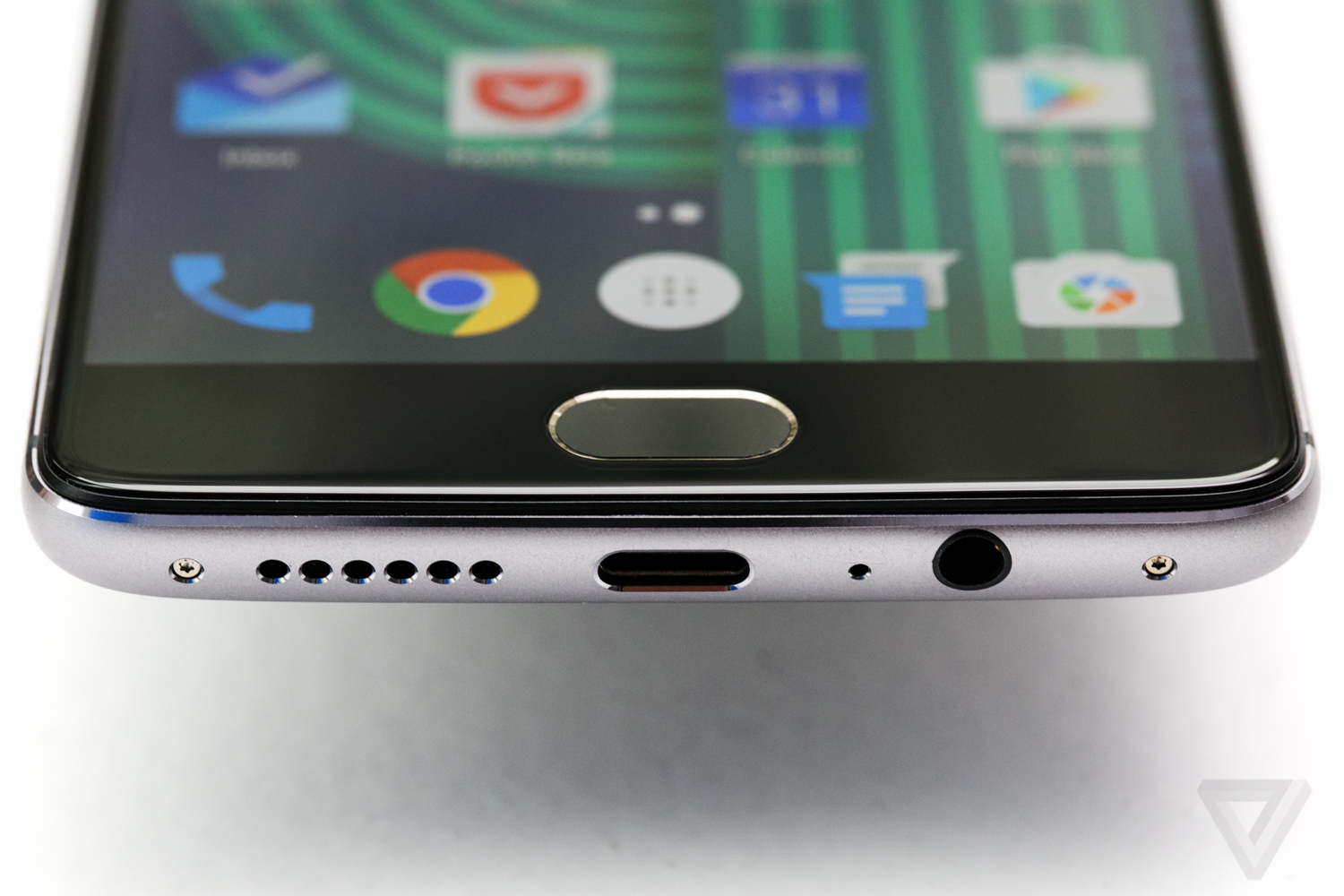
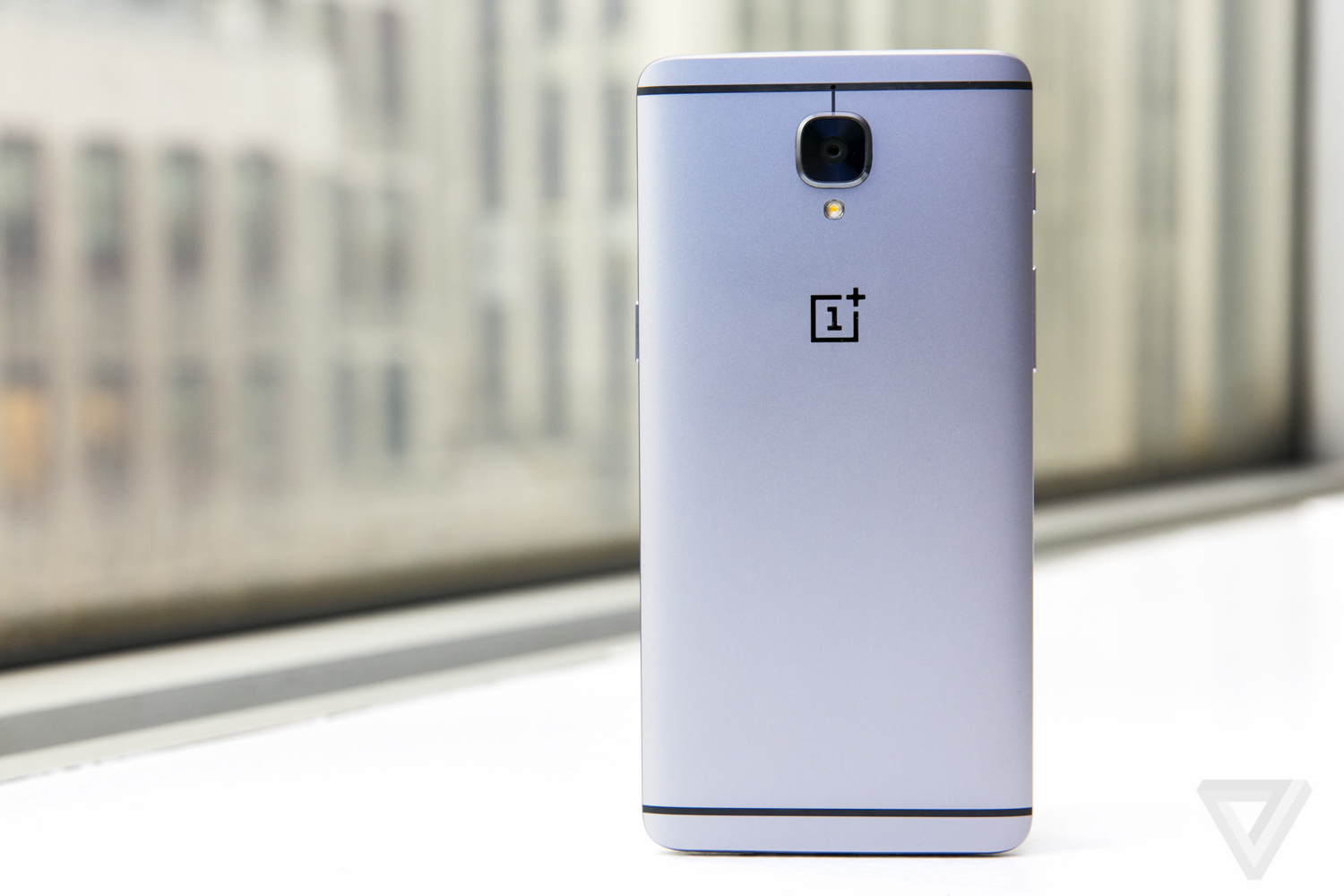
The first lesson OnePlus learned for this year’s phone is evident when you pick up the OnePlus 3. It’s an incredibly well-built device, with a unibody aluminum finish, tight tolerances, and good proportions. Unlike last year’s brick-like OnePlus 2 or OnePlus X that were rough around the edges, the 3 is comfortable to hold, thin without being too thin, and agile when going in and out of my pocket. These are the kinds of things that much older companies like Samsung and HTC took years to get right and are still figuring out, yet OnePlus has managed to pin down in just three generations.
The OnePlus 3’s design is far from original — it looks like the love child of an HTC and a Huawei with the front of an iPhone 6S — but it’s attractive and functional. It doesn’t turn heads like Samsung’s Galaxy S7 Edge, but it’s not so generic as to look like an unfinished reference design. The smooth, matte metal back isn’t as unique as the sandpaper-like finish on the OnePlus 2, but the company is selling a case with that finish for the new phone.
THE ONEPLUS 3'S DESIGN ISN'T WHOLLY ORIGINAL, BUT IT'S REFINED AND FUNCTIONAL
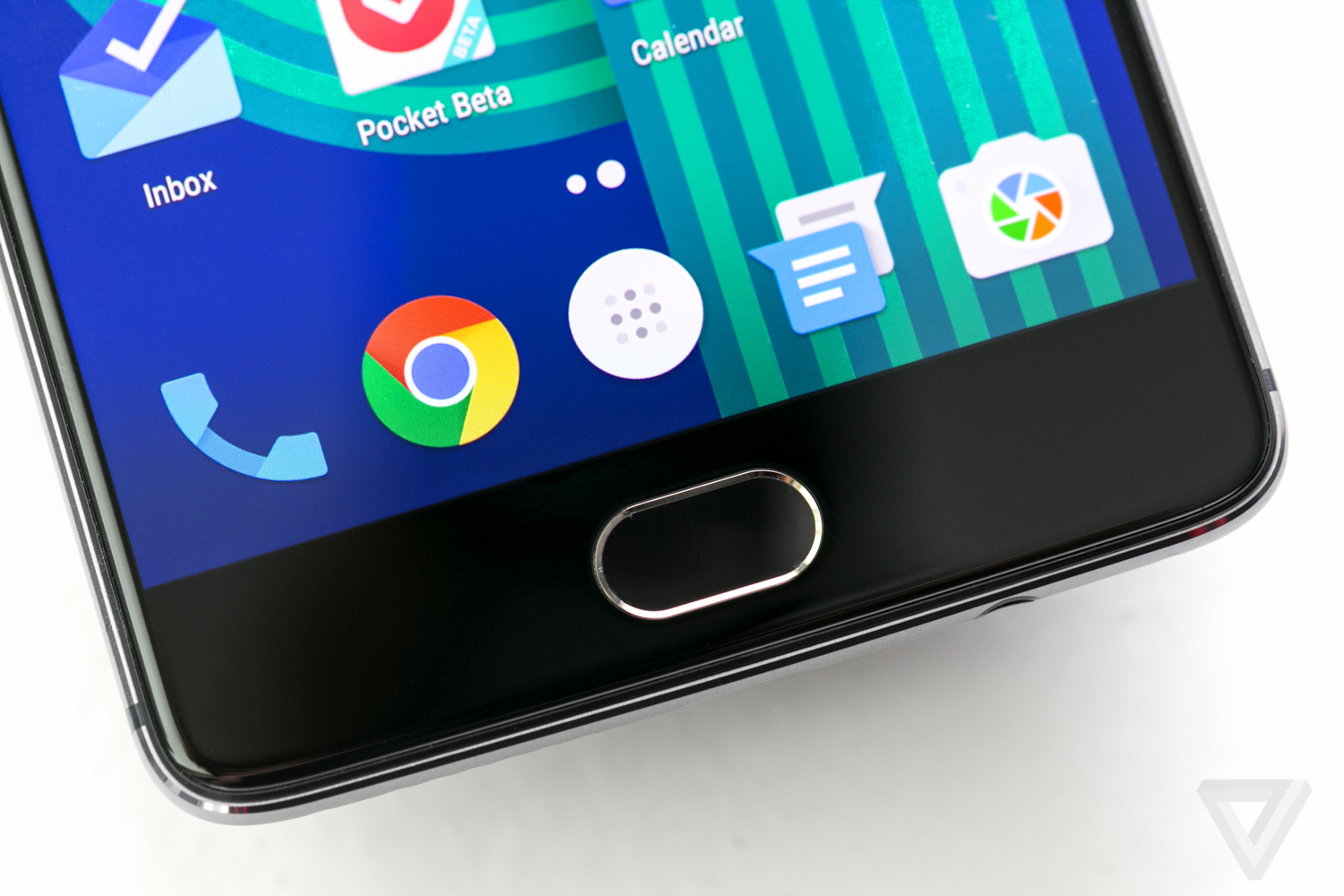
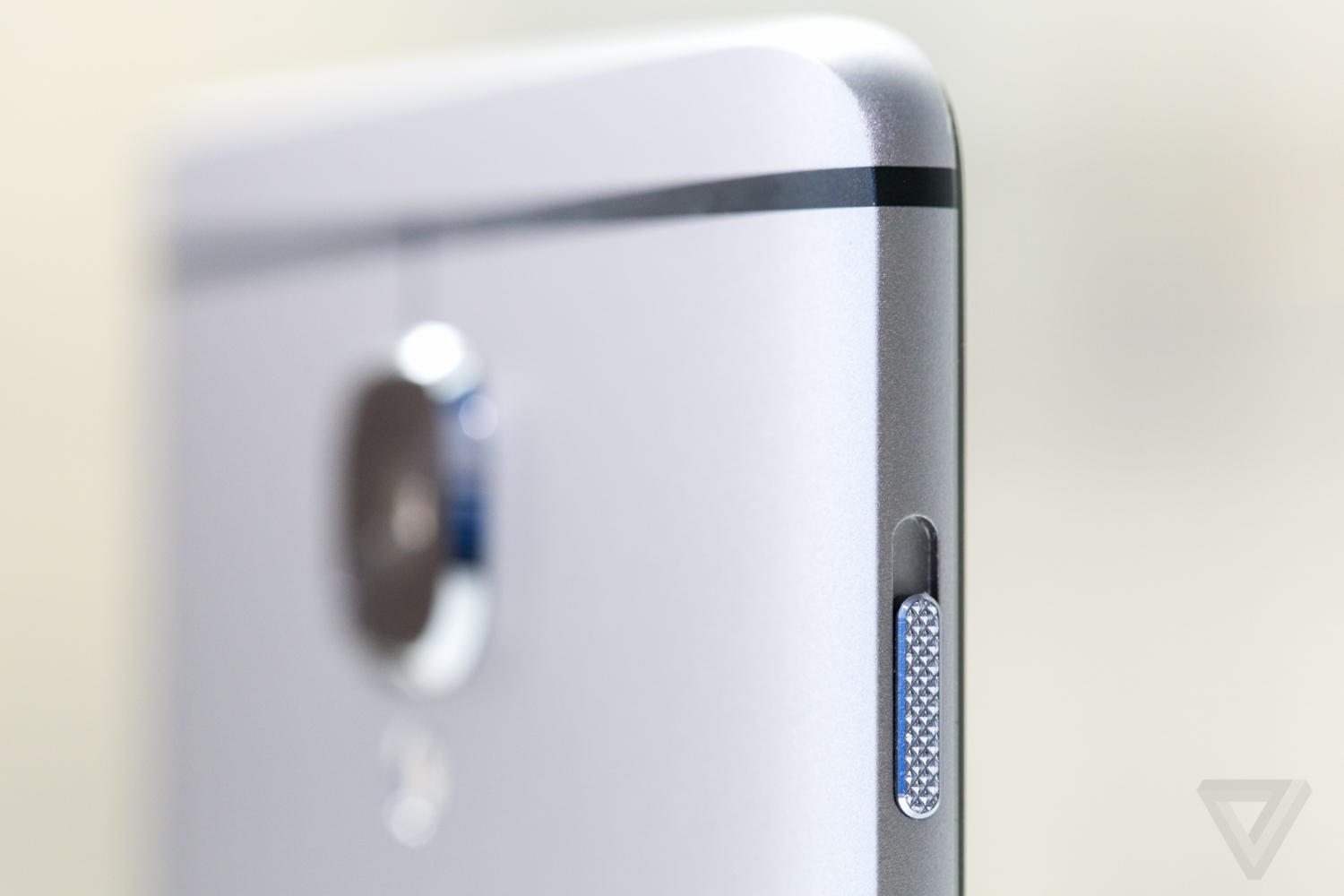
The fingerprint scanner below the display is fast and reliable — a significant improvement over the OnePlus 2’s — and the 3 still has the super useful switch on the side for toggling between Android’s three notification settings. It’s by far my favorite hardware feature on the phone and something I wish all Android phones came equipped with.
If you’re reading the OnePlus 3’s spec sheet, you might notice that its 5.5-inch 1080p display isn’t as high-resolution as the screens on the Galaxy S7, HTC 10, and other phones released this year. But if you didn’t look at the spec sheet and just used the phone, you’d be hard-pressed to notice the difference. Pei says it was a "conscious choice" to use a 1080p screen in place of a higher-resolution option, as it provides better performance and heat management than more pixel-dense screens. I’m inclined to agree: the AMOLED screen on the OnePlus 3 is bright, vibrant, easy to see outdoors, and at 401ppi, plenty sharp enough for human eyes. You might want something more pixel-densefor virtual reality, but for everything else you use a smartphone for, the OnePlus 3’s screen is more than sufficient.
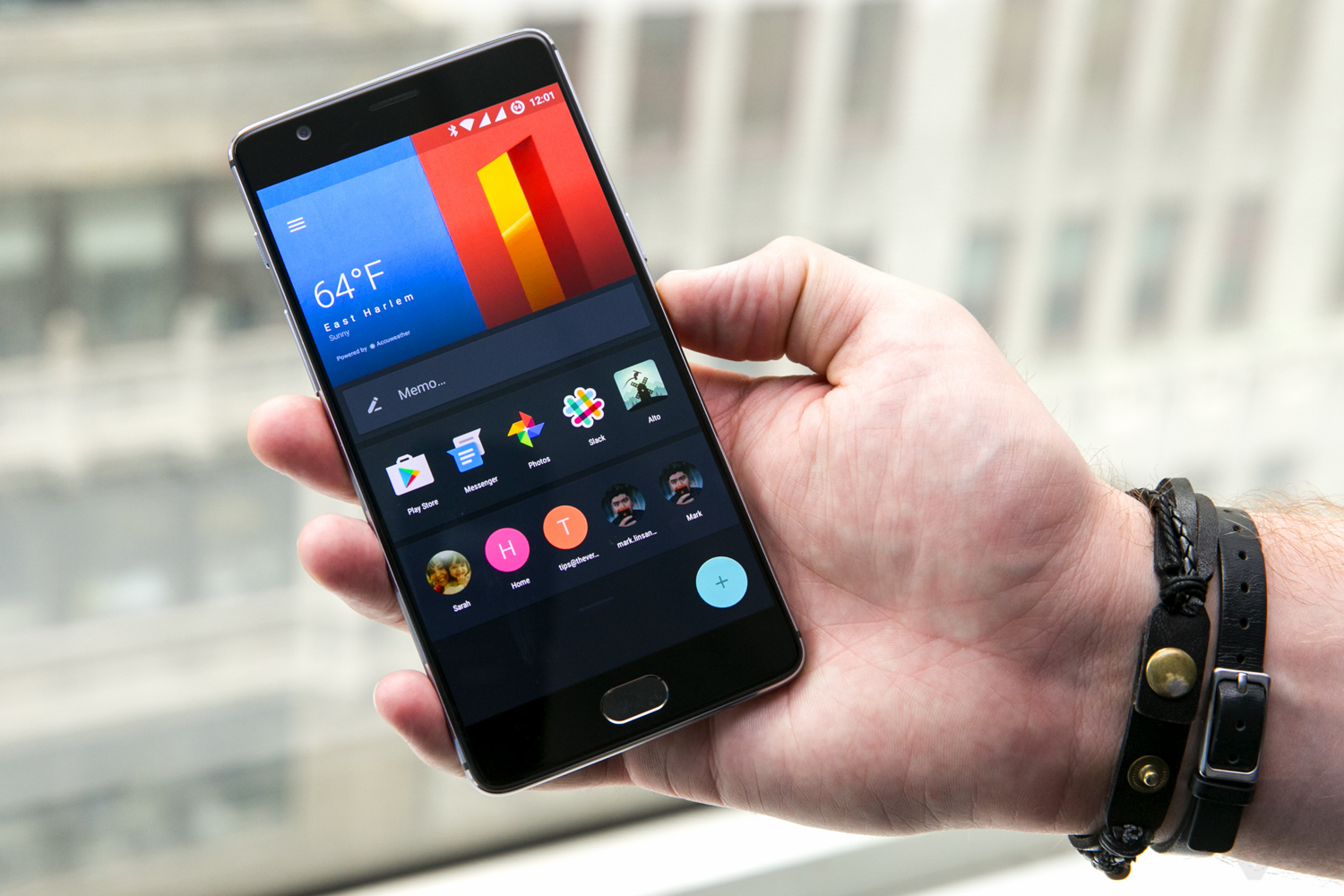
The next lesson OnePlus learned for the 3: don’t omit useful hardware features. "Our main customer base is early adopters," admits Pei. "We’re shifting our thinking towards that and giving them what they’re asking for."
Like the OnePlus 2, the OnePlus 3 charges through a USB Type-C port, but this time around, it also offers quick charging. OnePlus calls it Dash Charging, and like competing solutions from Qualcomm, Samsung, and others, it can recharge most of the phone’s battery in just a few minutes. Pei says the 3 can get "a day of use from half an hour" of charging.
QUICK CHARGING AND NFC BOTH SHOW UP THIS YEAR
OnePlus’ charging system is a little different, however, as it offloads the current regulation to the charging brick instead of managing it in the phone. Translated, this means that the phone is cooler when it charges and you can still use it for gaming and other intensive activities without sacrificing fast charging speeds. The downside is that in order to have quick charging, you have to use the charger and cable that come in the box with the OnePlus 3 — other quick chargers or USB-C cables will only charge the device at standard speeds. OnePlus is selling a compatible car charger and additional wall chargers for $29.95 and $19.95, respectively.
Another feature the OnePlus 3 has over its predecessor is an NFC chip, and it works for anything that supports NFC, including Android Pay and accessories that have tap-to-pair features.
The OnePlus 3 isn’t an exact match for a Galaxy S7 in terms of hardware features — it doesn’t have any water resistance or wireless charging — but it costs so much less than an S7 that I’m inclined to forgive those omissions. Other phones, such as the HTC 10 and LG G5, don’t offer those features either, so it’s not like the OnePlus 3 is alone in not having them.
Under the hood, the OnePlus 3 is competitive with or better than the best Android phones you can buy today. Its Snapdragon 820 processor is the same chip found in the S7, HTC 10, and LG G5, and the 6GB of RAM in the OnePlus 3 is actually more than you’ll get in any other smartphone right now. In my experience, the OnePlus 3 has no performance issues or hiccups: the interface is fast and responsive and it handles everything from messaging to multitasking to gaming with ease. The phone comes with 64GB of storage — there are no options beyond that — but it doesn’t support expansion through microSD. Pei says that few customers bought the entry level OnePlus 2 that had 16GB of storage, so efforts were focused on the most popular model this time around.
The 3,000mAh battery in the OnePlus is good enough to keep it going for a full day of heavy use and the aforementioned quick charging features make it easy to top up when needed. Of all the phones I’ve used this year, the only one that does better is the Samsung Galaxy S7 Edge, and that’s only because it has a 20 percent larger battery.
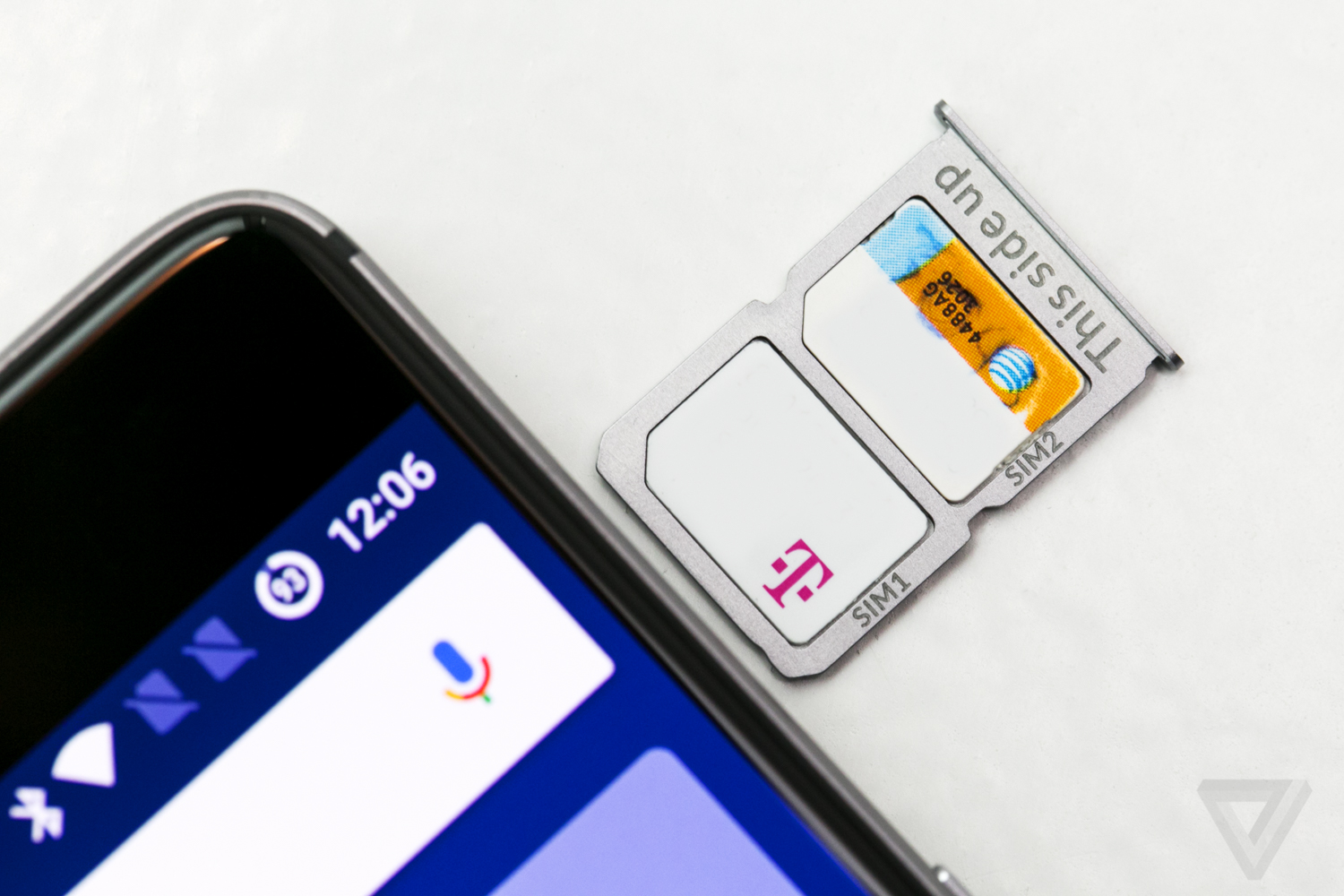
OnePlus is selling the 3 unlocked, but it’s only compatible with AT&T, T-Mobile, and their related MVNOs in the US. It does not work on Verizon or Sprint and likely never will — Pei says that supporting CDMA networks requires more engineering and support resources than OnePlus can devote at this time. The OnePlus 3 does have support for two nano SIM cards at the same time, which is a great feature if you frequently travel internationally.
OnePlus also learned that in order to have a competitive smartphone, it needs to have an excellent camera, and the 16-megapixel camera on the OnePlus 3 is much improved over last year’s phone. It has an f/2.0 aperture lens, optical image stabilization, and 4K video capability.
Unlike last year’s phone, the camera is very fast to launch and fast to focus, and takes good photos in both good and poor lighting. It’s not as good of a camera as the class-leading Galaxy S7, but not being the absolute best doesn’t take away from the fact that it’s still good. Colors are accurate and images are sharp and detailed. My only complaint is that the camera tends to rely on its optical stabilization too much, extending the shutter speed and making it more difficult to capture moving subjects than it should be.
The camera app is spartan, but still offers a manual mode and control over things like HDR and resolution. OnePlus added an "HD" setting for stills, but I’m not a fan — it increases the sharpening to unpleasant levels and I just kept it off as a result.


The company is still learning things with its software, but the build of Android 6.0 Marshmallow on the OnePlus 3 is much more polished and more reliable than the software the OnePlus 2 launched with. It’s very close in appearance to the software that ships on Nexus devices, and it doesn’t have a custom interface or major functionality differences from Google’s Android.
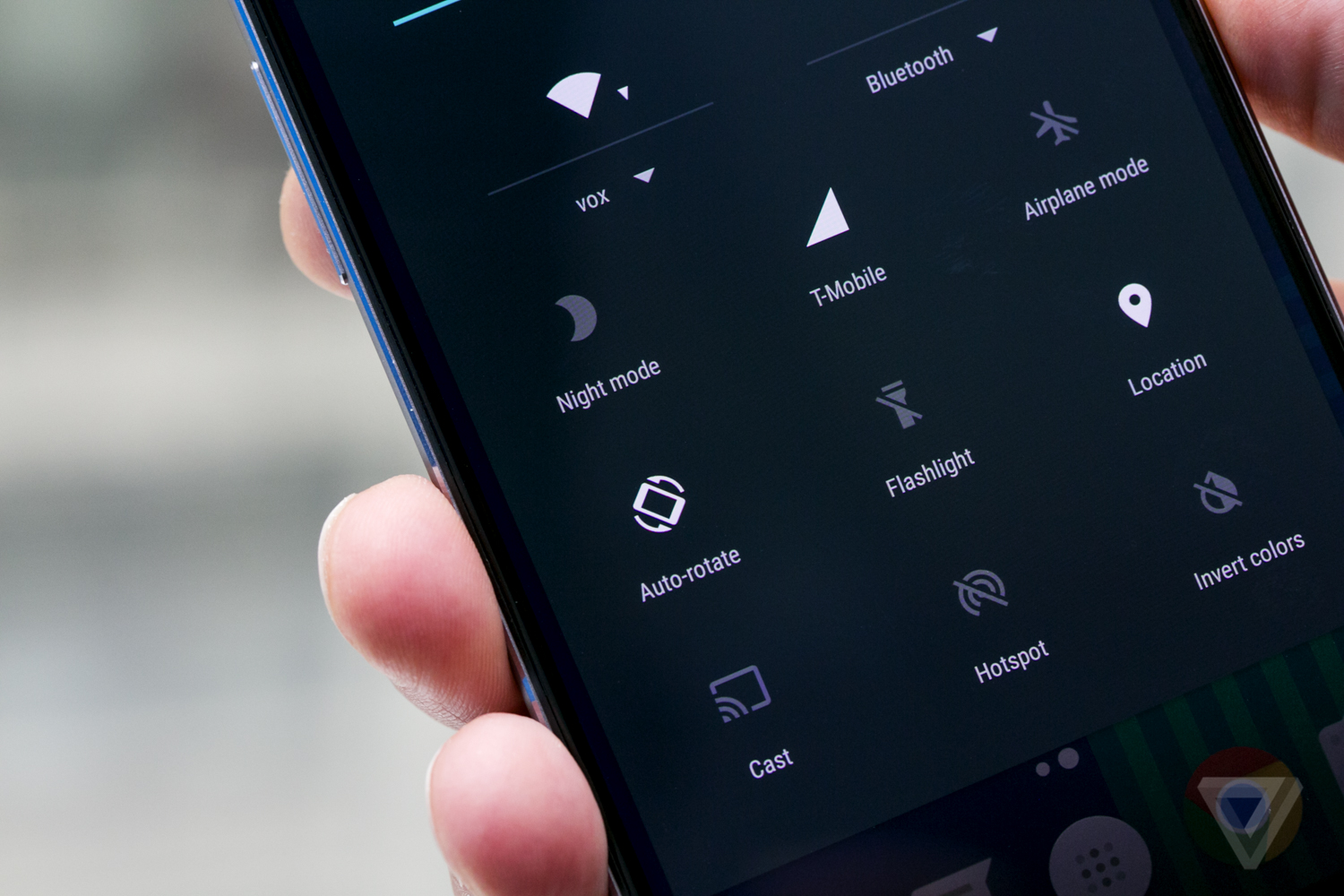
It does have a bunch of useful features, though, many of which have been borrowed from other smartphones. I can double-tap the home button or the power button to launch the camera, or I can wave my hand over the display to see the clock and any new notifications. I can double-tap the screen to wake it up, or set it so the screen comes on when I pull the phone out of my pocket. None of these features are particularly new, but they improve my everyday use of the phone. Other things, such as a night mode (think Apple’s NightShift on the iPhone) and dark theme are more novel, but a little unfinished. The night mode doesn’t turn on and off automatically and the dark theme only applies to a few areas of the settings menu.
The OnePlus 3 is refreshingly free from the bloatware and garbage apps pushed on phones by carriers. Aside from the usual suite of Google apps, the only preinstalled apps on the phone are basic file management, image gallery, and music playing apps. "Eventually there will be grander [software] ambitions," says Pei, "but for the OnePlus 3, we focused on three pillars: speed, battery life, and stability." That focus is evident in my experience with the device: it’s fast, efficient, and stable without any glaring issues.
SOFTWARE UPDATES REMAIN AN OPEN QUESTION
The open question here is: how long will it take for OnePlus to deliver software updates to the 3? The OnePlus 2 was promised to get Android Marshmallow as soon as the new software was announced last fall, but after months of delays, it only just received the update a little over a week ago. Pei won’t commit to an update schedule for the OnePlus 3, but he admits that OnePlus’ early adopter customers want to see fast updates. "The biggest lesson we’ve learned over the past few years [with software] is to show and not just tell," says Pei.
With the invite system and over-the-top marketing claims a thing of the past, OnePlus is leaning on the strength of its product. Fortunately for the company, the OnePlus 3 is an incredibly strong product to lean on. It hits all the marks for what an Android phone should offer in 2016, and it does so at a price that’s significantly less than the competition.
The OnePlus 3 isn’t perfect: you can’t use it at all if you’re a Verizon or Sprint customer, and depending on your priorities, it might not have everything on your wish list. But it’s a significant step forward for OnePlus, in terms of both quality of the product and how you’re able to buy it. It’s also a step forward for the industry as a whole: it’s a device that keeps pace with much more expensive products while costing much less. The OnePlus 3 is the rare kind of phone that I can recommend without reservations, other from making sure it works on your carrier.
THE ONEPLUS 3 IS A SIGNIFICANT STEP FORWARD FOR THE COMPANY
As our chat comes to an end, Pei notes that future OnePlus "conversation will continue to go towards the product itself" and the company is "confident about future products." If OnePlus’ future phones are as good as the OnePlus 3, I’ll be happy to keep talking.
Photography by Amelia Krales
Video by Phil Esposito
| The Verge http://www.theverge.com/2016/6/14/11931290/oneplus-3-android-smartphone-review --- News Suite bit.ly/newssuiteapp

Facebook wants Messenger to 'reinvent the inbox' with a new Home screen

By Ashley Carman on June 16, 2016 10:07 am 5

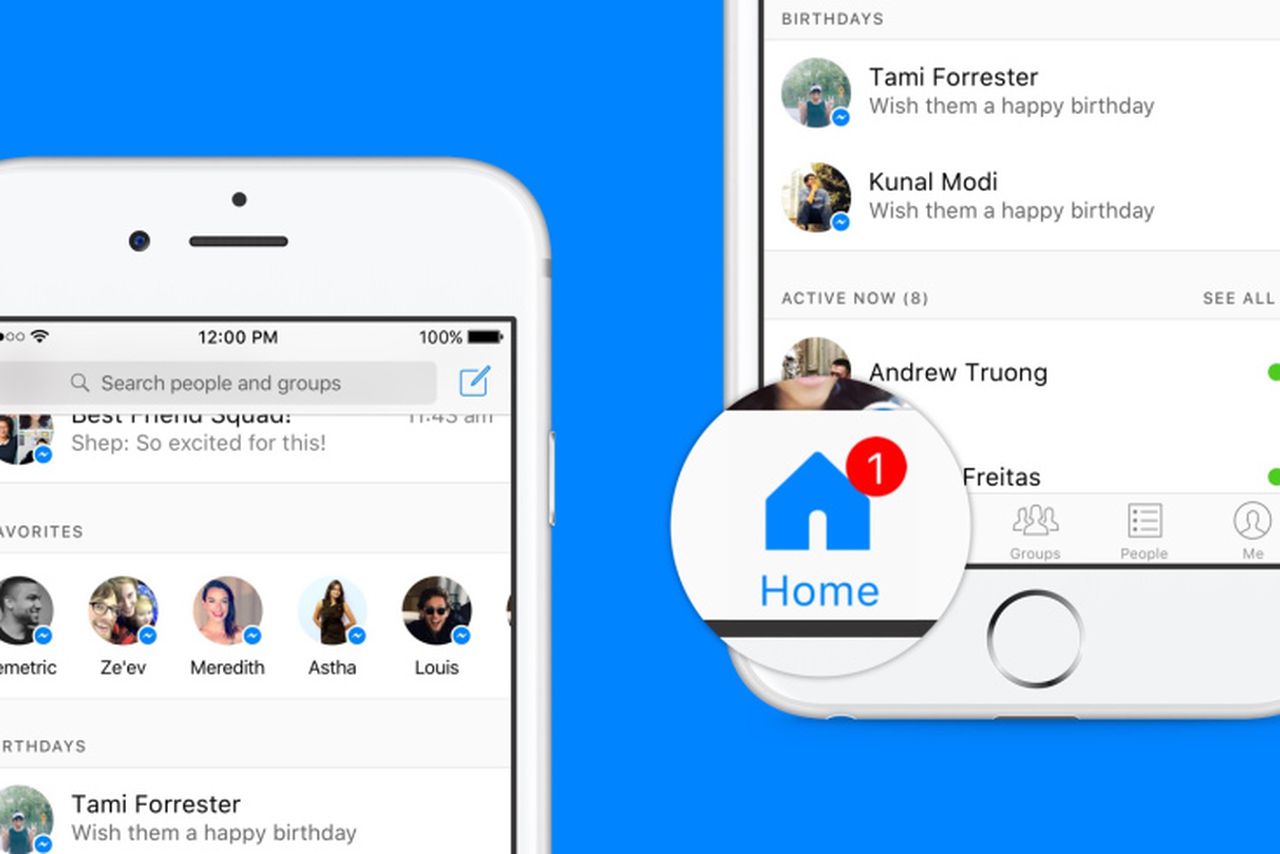
Facebook is updating its Messenger app today to create a new homepage that will act more or less like an inbox. It’ll place recent conversation threads and users' most frequently contacted friends on the launch screen, which is now called "Home." Messenger currently displays threads like most other texting apps — in chronological order with the most recent conversation at the top of the screen.
"Up until now, most inbox experiences haven’t kept up with the new ways people connect," the company wrote in a blog post. "So, we’ve been thinking about how we can make it simpler and easier to find what you want to start a conversation."
\
David Marcus, VP of messaging products at Facebook, said the company is "reinventing the inbox," when he described the project at the WiredBusiness Conference today. In addition to a "Favorites" section, which shows the friends users message most frequently, there will be birthday reminders and an "Active Now" feature that shows who's online.

Wednesday, June 15, 2016

Lenovo Phab 2

 Lenovo Phab 2: Lenovo Tangos with Google on its 6.4-inch Phab2 Pro The best thing about the Phab2, according to Lenovo? It’s price. At $199, th...
https://smartnewspage.blogspot.com/p/lenovo-phab-2.html

Thursday, June 2, 2016

The Samsung Galaxy Note 6 Rumer


The Samsung Galaxy Note 6 will be Samsung’s last line of defence against the iPhone 7 later this year.


This year’s Samsung Galaxy Note 6 is going to be EPIC. And that is very good news for long-standing fans of the phablet line, because last year Samsung really dropped the ball and did not bring the Galaxy Note 5 to the UK.
Instead it pushed the Galaxy S6 EDGE+ — a bigger, more expensive version of the Galaxy S6. This initiative didn’t go down well at all. In fact, it was kind of a PR disaster for Samsung, who, at the time, wasn’t having the best of luck anyway.
Things are very different now, though. The Galaxy S7 is flying off shelves, analysts have their knives out for Apple, and the Android space, at large, hasn’t looked this strong in years — and we’re only just in Q2.
The rest of the year looks to be very exciting as well with BIG releases from Samsung, of course, OnePlus, Sony and BlackBerry. OK, granted the latter of which isn’t a MASSIVE deal, but I for one am very interested to see how BlackBerry’s Android project develops.
"Making some assumptions about the launch of the iPhone 7 range, the Galaxy Note 6 will have four weeks of retail sales, reviews, and articles, ahead of Tim Cook’s reveal of Apple’s new hardware. If Apple stays true to form those handsets will go on sale in the two weeks after the launch event," says Forbes. "Samsung’s launch strategy would mimic the Galaxy S7 and S7 Edge release schedule which allowed the South Korean handsets to get the jump on Apple’s iPhone SE in sales, mind share, and positioning."
The Galaxy Note 6 might not be happening, though; rather, the handset is still coming out with the same specs and hardware outlined in all the leaks, but it potentially will not be called the Galaxy Note 6. No, apparently Samsung is going to call it the Galaxy Note 7 instead. And the reason is because its current Galaxy S flagship is called the Galaxy S7 and Samsung doesn’t want people thinking its new Note isn’t quite as new and shiny as its 2016 flagship phone. Hence the number change.
This sort of makes sense, but it is very confusing for consumers and tech-journalists; everybody is expecting the Galaxy Note 6, but when Samsung announces the handset later on this year it will almost certainly be called the Samsung Galaxy Note 7. Guess a few eyebrows will be raised after that, but everything will settle down pretty quickly once word on the the official specs and hardware are confirmed. And I personally think this handset will more than give Apple's iPhone 7 a run for its money. 
And here are six points expanding on that theory. 
Insane Specs
We already know quite a bit about the proposed specs and hardware for the Galaxy Note 6. Put curtly: this thing is going to be a monster, the likes of which never before seen in the mobile space.
We’re talking bleeding-edge CPU technology, top of the line connectivity and 6GB of RAM — yes, you read that right: SIX GIGABYTES of memory.
The Samsung Galaxy Note 6 is the next big announcement to hit the mobile space, alongside the OnePlus 3 and Google’s brand-spanking new Nexus phones.
The headline-grabbing Galaxy Note 6 has been the talk of the town since, well, just about ALL of 2015/16. The handset, which is believed to feature 6GB of RAM and a new imaging technology, is poised for a release ahead of Apple’s iPhone 7.
Samsung has now officially announced its 6GB 10nm LPDDR4 RAM chip and this is now ripe to go inside a handset. And what’s Samsung’s next handset? Yep, you guessed it: The Galaxy Note 6 and that handset as you will all already know has been tipped to feature 6GB of RAM since rumours first started circulating about it.
Beyond this the Galaxy Note 6 is tipped to feature a 2K display, new software features for the S-Pen, a raft of next-generation hardware, including a Snapdragon 820 CPU, and a refined design that will no doubt take a few queues from the company’s HUGELY successful Galaxy S7.
Sources reckon Samsung is still torn on whether to make the Galaxy Note 6 an edge device; apparently the company is testing multiple models ahead of its official announcement. Also, depending on when it launches, the Galaxy Note 6 could well be one of the first handsets to run Android N.
Google’s Daydream VR platform is also likely to feature as well. I say, likely, not certain, because Samsung has some of its own VR aspirations and this could cause some friction between itself and Google in 2016’s VR space. Still, if I were a betting man I’d wager the Note 6 will utilise Daydream; this would go a long way to explaining why it needs 6GB of RAM.
This is one handset I am VERY excited about. If only 50% of the rumours are true, it’ll still be one of the best phones in the business -- and that’s saying something with the quality of what’s already available on market at present.
Samsung is back, ladies and gentlemen.
The uplift will be INSANE.
Just a few years ago many gaming PCs only have 4GB of RAM, so the advent of 6GB inside a phone is frankly NUTS. What are you going to be using all this memory for? Is it overkill? Does anyone need this much memory in a phone?
At this stage of the game, the advent of 6GB of RAM is likely all about performance. However, developments in VR -- things like Google’s Daydream platform, for instance -- are going to be bringing tons of new uses to phones between now and 2017. And these new features WILL require masses of grunt in order to achieve silky smooth performance.
Beyond this there is of course the theory that Google will bring Android and ChromeOS closer together, perhaps even unify the platform, and create a type of hybrid mobile phone that can be used as a phone but also as a console for connecting to HD displays with a connected keyboard and mouse. Basically, when you have this kind of power at your disposal, they sky’s the limit with potential applications.
New Camera?
The Galaxy S7’s camera is phenomenal and is easily one of the best point and shoot phone cameras we’ve EVER tested. Period. But Samsung isn’t one to rest on its laurels. It knows the iPhone 7 will appear later on this year and the addition of the Galaxy Note 6 to its phone arsenal is its best line of defence against Apple’s hugely anticipated new iPhone.
We know the iPhone 7 will be a great camera phone; talk of dual-lens cameras has been going on for some time now. That means Samsung has to up the game with the Galaxy Note 6 and current word on the street suggests we will see some improvements over the shooter currently in use aboard the Galaxy S7.
“Samsung is working on a brand new 1/1.7-inch CMOS camera sensor with an aperture as wide as ƒ/1.4,” reports Sam Mobile. “The new sensor could have a resolution of anywhere between 18-24 megapixels. The company is also working on a new compact 1/2.3-inch camera sensor.”
It added: “Samsung recently announced that it will not release any new cameras in its NX lineup (at least in some markets), and it has been moving people from its NX camera department to its smartphone department. The South Korean smartphone giant is really focused to improve the image quality on its smartphones, and it seems to have a very aggressive roadmap.”
New Note Productivity Features
Samsung is planning on introducing a new productivity feature called “Samsung Focus” which we’re expecting to function a lot like the BlackBerry Hub, meaning it will be a place where you can manage all your incoming and outgoing emails, tweets and the like.
Samsung Focus reportedly acts as a communications aggregation hub, bringing together, amongst other things, emails from a selection of different sources - again as with BB Hub, the idea is to eliminate the inconvenience of hopping between applications. As with BB Hub it’ll show calendar info, contacts, and memo notes in the same interface too.
Beautiful Design
Samsung is apparently testing two Galaxy Note 6 styles: 1) normal, and 2) with an EDGE display. Apparently it cannot decide on which to go with, but there will only be one. Our preference? Go with the EDGE, it just looks so much smarter than the normal version on the Galaxy S7.
Following the launch of the Galaxy S7, shipments and pre-orders for the Galaxy S7 EDGE appear to be the far more popular than the standard model. And when you’ve seen both in the flesh you will know why. In other words, Samsung punters LOVE the EDGE display. And, yes, it might not be that useful, but as a design feature alone it is stunning and a big USP for the Samsung brand.
MASSES of Storage
Another first here; the Samsung Galaxy Note 6 is tipped to feature up to 256GB of storage — and, no, not from an SD card. This is internal storage and if true it would be one hell of a USP for the Galaxy Note 6 and its user base.
There will also likely be SD-support too. The Galaxy S7 featured it for one and Samsung knows its punters like having the option of expanding the handset’s internal storage -- even if it is a massive 256GB.
The other big question is whether or not Samsung will introduce a removable battery inside the Galaxy Note 6. Samsung tends to prefer unibody chassis design these days, so if I were a betting man -- which I am -- I’d put my money on the Note 6 NOT having a removable battery.
And the reason will be simple: Samsung will pack a monstrously sized cell in the Note 6 and argue that removable batteries are not required. Of course, not everyone will see eye to eye with Samsung on this -- as evidenced in comments below -- but in today’s space you only really have one option when it comes to handsets with a removable battery and that is the LG G5.
ChromeOS Dual-Boot?
This is something of a long-shot and something of an "out-there" theory, but a potential scenario all the same. Why does the Galaxy Note 6, as well as other upcoming flagship Android phones, feature 6GB of RAM? That’s a lot of memory for what people usually do on their phones.


Plus, there has been talk of a Android/ChromeOS cross-over for quite sometime now with reports suggesting it could happen this year. And what better device to road-test it on than the Galaxy Note 6?
UPDATE: Okay, the 6GB of RAM might not be for ChromeOS. Google’s immediate plans for ChromeOS and Android are a bit clearer now and they seem, at least for the time being, only to include support for Android apps on ChromeOS. This is still a HUGE positive for Chromebook users, but still a tad disappointing to me as I was expecting some kind of dual-boot capabilities inside Android N.
The reason for 6GB of RAM, save for sheer performance, could well be to do with Google’s Daydream VR platform which will be part of Android N and function on handsets with compatible sensors and displays. Considering how big a deal the Galaxy Note 6 is I’d be very surprised if wasn’t a Daydream-compatible device.

Sunday, May 22, 2016

HUAWEI P9

HUAWEI P9 REVIEW

Huawei’s P9 is ready to rumble with it’s incredible Leica camera tech and sleek metal body.

Huawei P9
The Huawei P9 is going to change smartphone photography forever — at least, that’s what Huawei says. It’s a serious claim, so how does Huawei hope to accomplish this revolution? The P9 has a dual-lens camera co-engineered by photography experts Leica. Although we’ve seen dual-camera setups before, and industry partnerships aren’t new, either; Huawei took its partnership with Leica to the next level. The two companies worked closely together to build the P9’s cameras and the app experience.

 
+Amazing camera
+Beautiful design
+Compact metal frame
+Strong battery life
+High performance processor
+Smooth software
 
-Quite slippery
-Some UI niggles


Thursday, May 19, 2016

Nokia reborn

Nokia will return to mobile with Android phones and tablets


The Nokia brand will return to the smartphone market. Just as Microsoft announced it's offloading Nokia's old feature phone business to a Foxconn subsidiary and a mysterious Finnish company called HMD Global Oy, Nokia has revealed that HMD is also acquiring the relevant rights to use the Nokia name on smartphones and and tablets for the next ten years. That means we'll start seeing "Nokia-branded" phones and tablets very soon. And they'll be running Android.

We don't know a lot about HMD yet, but Arto Nummela, currently a Microsoft mobile executive, will leave the company to be HMD's CEO when the deal closes. Before joining Microsoft Nummela worked at Nokia for over a decade. Florian Seiche, another Microsoft mobile executive with a Nokia past, will join HMD as president. If the pair's involvement is anything to go by, it seems that HMD will feature some faces familiar to those that followed Nokia in its heyday.

HMD says it'll invest $500 million over the next three years to develop and promote products. This money will come both from investors and from profits from the newly-acquired feature phone business. Nokia's involvement in the new devices will be very limited. It'll take a place on HMD's board, and set "mandatory brand requirements and performance related provisions." That essentially means it's going to make sure that HMD isn't dragging its name through the mud by releasing awful devices.

Although FIH Mobile -- the Foxconn subsidiary that bought a share of Nokia/Microsoft's feature phone business -- isn't involved in this rights deal, it will be the manufacturer of the new HMD smartphones and tablets. It seems as though HMD will be selling and marketing the devices, while FIH will be doing the manufacturing. Of course, the pair will have access to Nokia's vast arsenal of mobile patents through the agreement.

Related Posts

VIDEO GAMES